
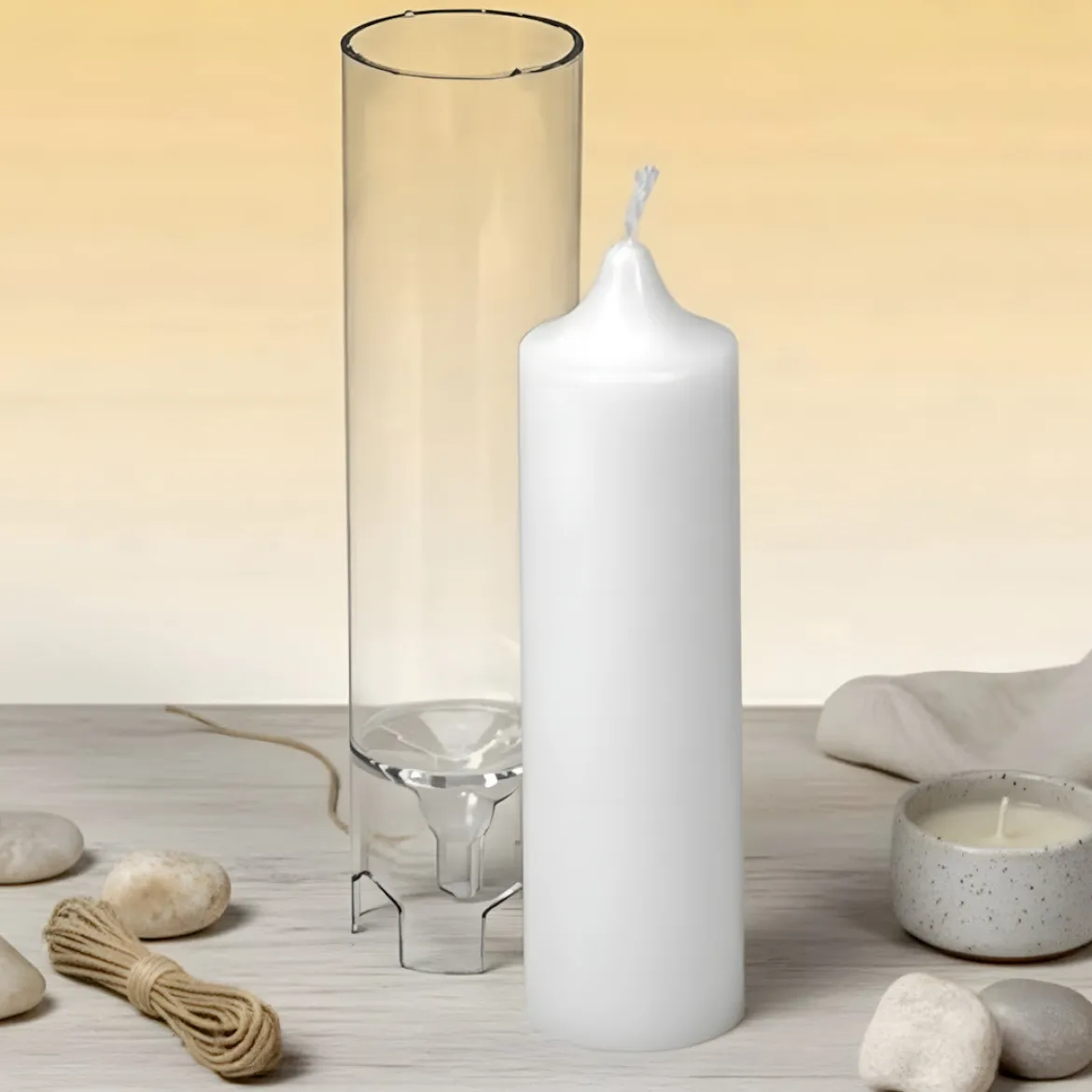
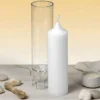
Pointed cylinder candle mould – 50 x 140 mm
€8.51
The 50 x 140 mm pointed cylinder polycarbonate candle mould is perfectly suited to making moulded candles with a clean, uniform finish. Its rigid, transparent structure lets you create a well-defined cylinder with a smooth surface and a polished finish.
Polycarbonate is a solid, durable material, designed to withstand repeated use. Its transparency makes it easy to monitor filling during pouring and helps achieve clean demoulding when the making steps are followed correctly.
We advise against using beeswax in polycarbonate moulds.
Why use a polycarbonate mould for your moulded candles
Unlike flexible moulds, polycarbonate guarantees excellent stability and keeps the shape of the candle perfectly. In particular, this material gives you:
- A smooth, glossy finish
- A uniform cylindrical shape
- Great resistance for repeated use
- Simple care with hot water
To make demoulding easier, it is important to respect the wax temperature and the cooling times.
How to make your cylindrical candles
Preparing and melting the wax
Place your wax in a suitable container, then heat it to 80 to 90 °C, monitoring the temperature with a thermometer. A well-controlled temperature promotes an even surface and easier demoulding.
Warning: never melt wax directly in a saucepan or in contact with a flame.
Adding colourant
To colour your cylindrical candles, stir in liquid colourant or colourant chips at a rate of about 2 to 4 g per 1 kg of wax. To check the resulting shade, pour a small amount of wax into cold water. Too much colourant can impair burn quality.
Fitting the wick
Select a wick suited to the diameter of the mould. Tie a double knot at one end, then insert it through the tip of the mould. Secure it at the other end with a pin so that the knot properly closes the opening and prevents any wax leaks.
Pouring and filling
Pour the liquid wax into the mould. As it cools, a dip may appear in the centre. Top up with a little hot wax if necessary. To create a layered effect, the mould can be tilted slightly and steadied in a suitable holder.
Demoulding
Once the wax has cooled completely, cut the knot at the base, then carefully remove the candle. If needed, place the mould in the fridge for a few minutes to make removal easier.
Practical tips and safety
Work on a protected surface and wear an apron. Before each use, make sure the mould is clean and completely dry. Always check the wax temperature with a thermometer.
Candle making must be carried out under adult supervision. Wax vapour becomes flammable from 180 °C. Never leave a burning candle unattended, and place it on a heat-resistant surface.
A reliable accessory for creating cylindrical candles
The polycarbonate cylinder candle mould is an essential tool for makers of handmade candles. Resistant, precise and reusable, it lets you make even, elegant cylindrical candles, suited to decoration and to sale alike.
The mould is supplied with a metal needle to hold the wick in place. Sealing putty or a plug is required to ensure a good seal.
Be the first to review “Pointed cylinder candle mould – 50 x 140 mm”
Related products

À Ne Pas Manquer

A Ne Pas Manquer

A Ne Pas Manquer

À Ne Pas Manquer

A Ne Pas Manquer

À Ne Pas Manquer

A Ne Pas Manquer

À Ne Pas Manquer

A Ne Pas Manquer

A Ne Pas Manquer

À Ne Pas Manquer

A Ne Pas Manquer

À Ne Pas Manquer

A Ne Pas Manquer

À Ne Pas Manquer

À Ne Pas Manquer
Reviews
There are no reviews yet.